

Discover what school marks don’t show.
Fun online activities that map how a child performs across 14 cognitive domains.
.
Grades 3–12 | CBSE, ICSE, Cambridge & IB aligned | NEP 2020 aligned.

We keep hearing these…
“Some students are trying, but their performance still doesn’t match their effort.” – Academic Counsellor
Effort isn’t the problem.
The effort is real. It just leaks before it reaches the page. Weak working memory, slow processing or drifting attention can hold a child back no matter how hard they try. The answer isn’t more effort. It’s the right kind of support.
“Teachers know a child is struggling, but it is hard to explain the problem clearly to parents.” – Principal
Concern needs a shared vocabulary.
Everyone can see the child is struggling. Nobody has the words for why. Attention. Memory. Processing speed. Executive function. Once teachers and parents use the same terms, the conversation moves from worry to a plan.
“Careless. Slow learner. Lazy. Not serious about studies.” – Class Teacher
Labels describe frustration, not the child.
“Lazy” is what a stuck cognitive skill looks like from the outside. Name the actual skill — holding instructions, resisting distraction, recalling on demand — and the same child becomes teachable again.
“She’s brilliant in class. But something happens in the exam hall.” – Subject Teacher
Knowing it and showing it are two skills.
In class she has time, prompts and no pressure. In the exam hall she has none of those. Under pressure, memory narrows and recall slows down. The knowledge is there. Reaching it is the hard part.
Let’s stop guessing/judging a child, and start understanding their real struggles.
How SparkFinder works
Three simple steps, about 45 minutes, and no test anxiety.
Play
Your child plays short, delightful activities. No pressure, no pass or fail.
Analyse
We quietly track patterns across 14 cognitive domains and 238 skills.
Understand
You get a clear profile: natural strengths, growth areas, next steps.
14 cognitive domains · 238 skills
Fun Activities That Truly Assess Cognitive Abilities
A paper-based test knows what your child answered. SparkFinder sees how they got there.
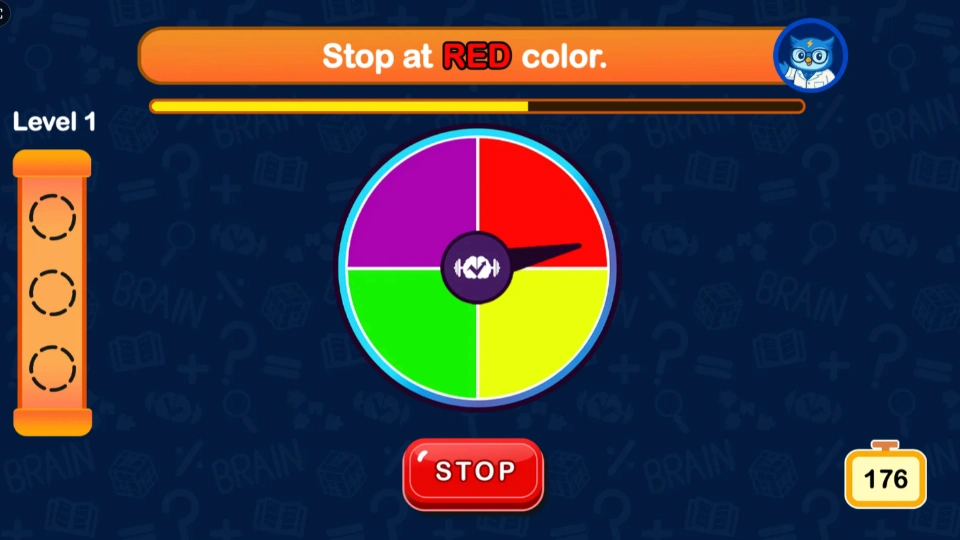
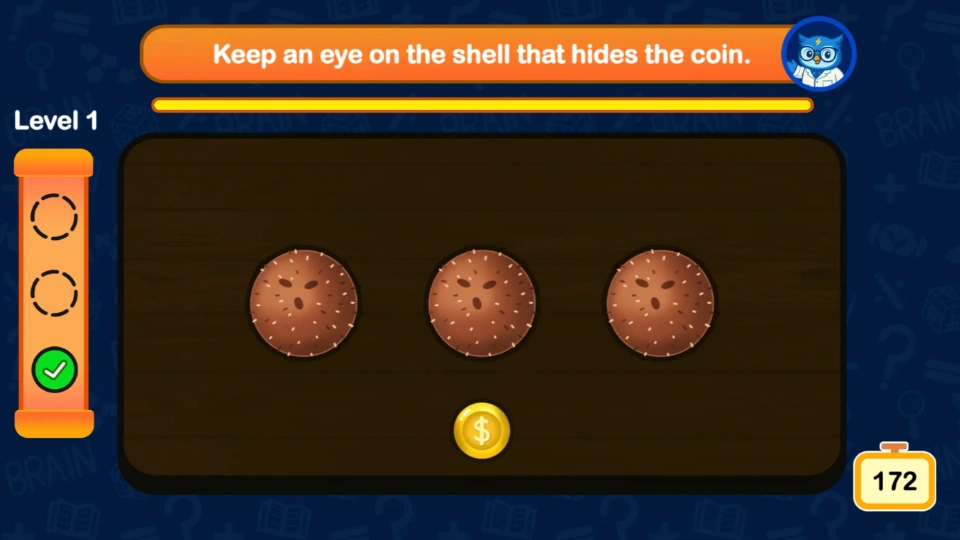
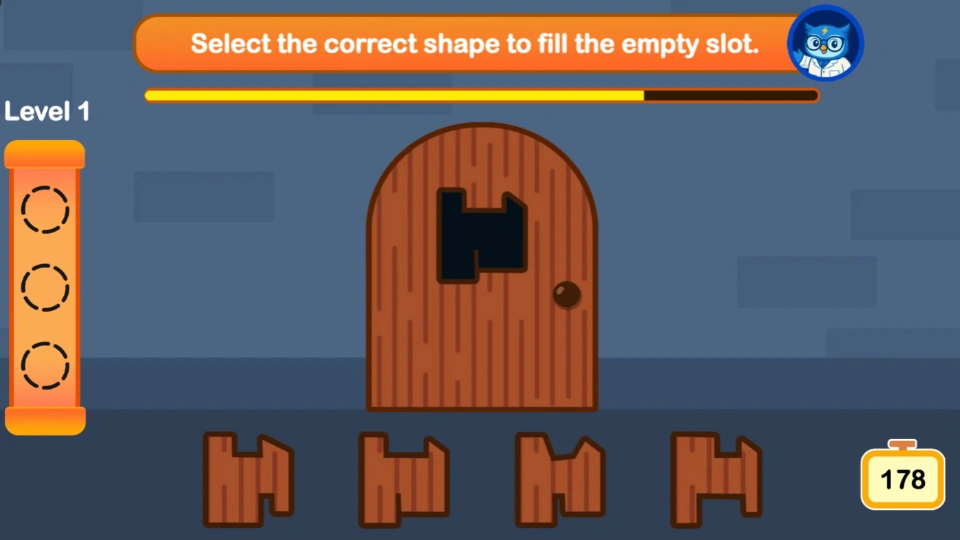
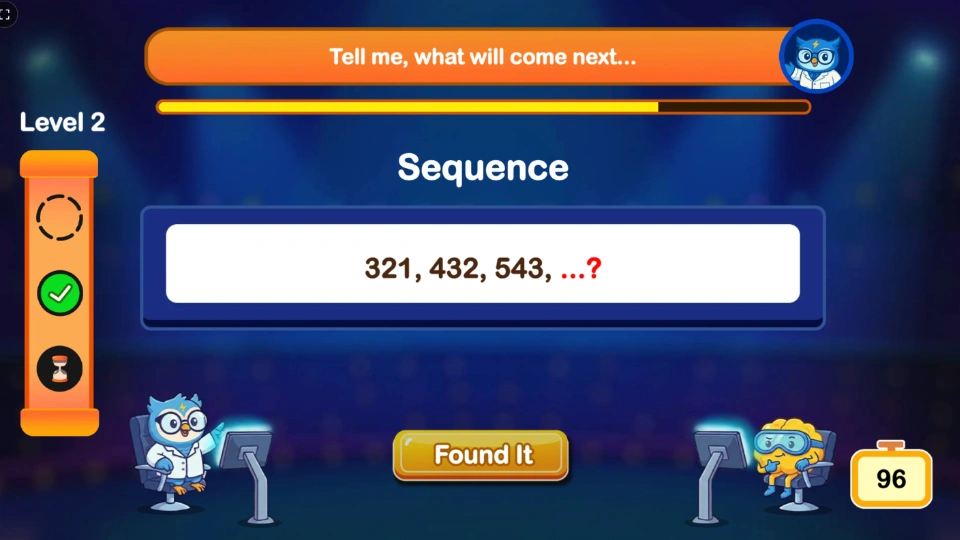
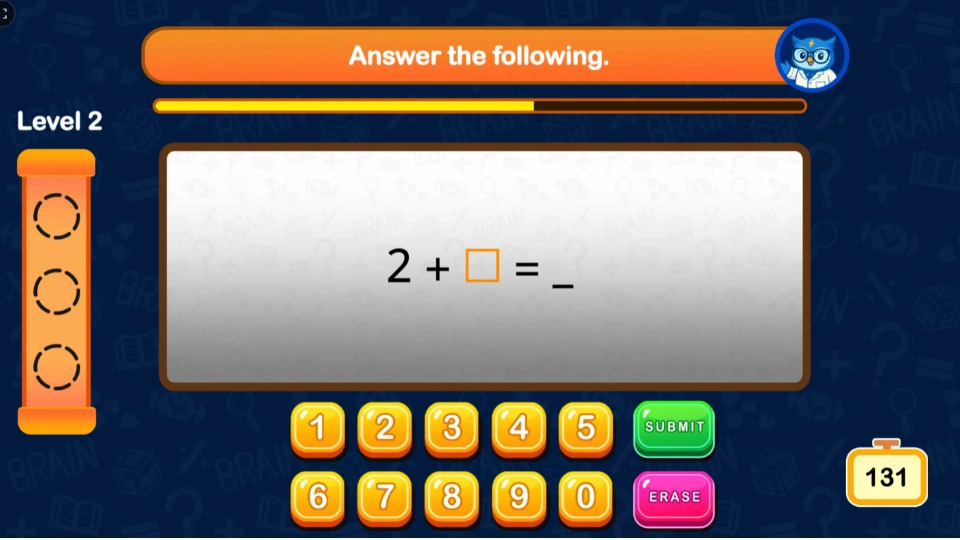
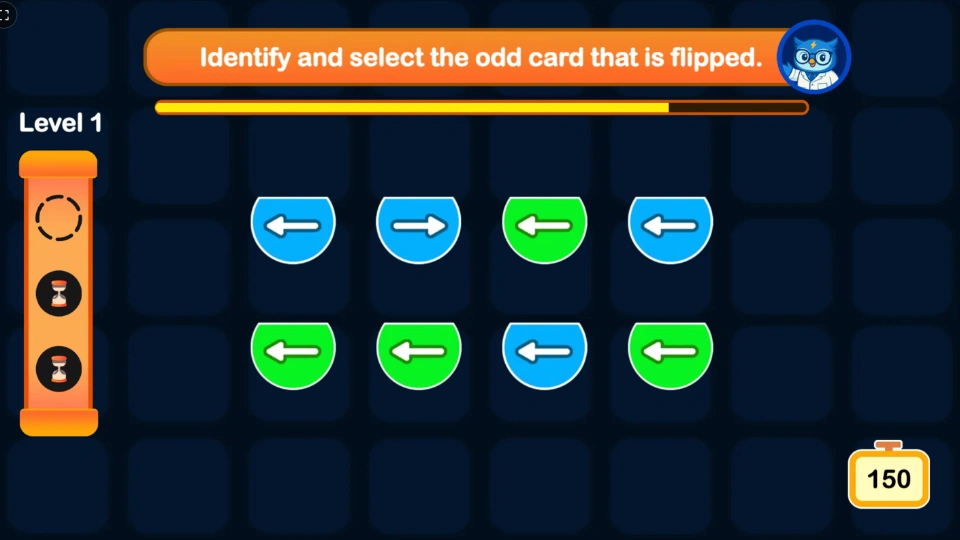
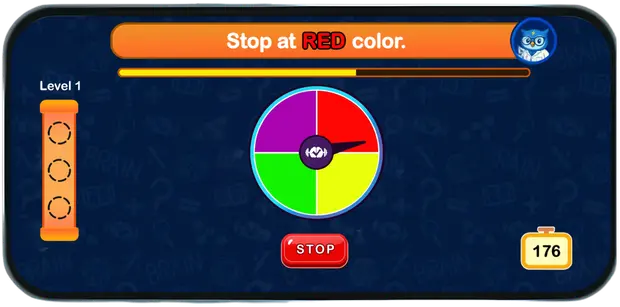
SparkFinder works smoothly across devices and browsers even at low internet speed
One link, any screen. The same activities and the same timing on whatever the school already has.
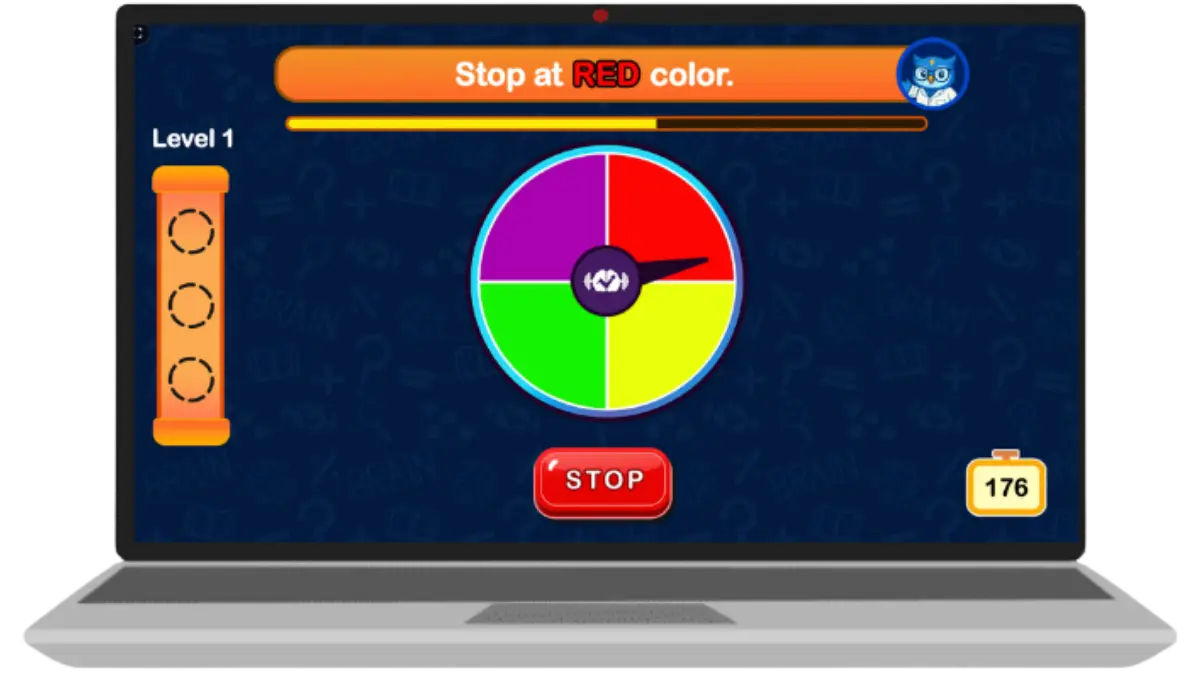
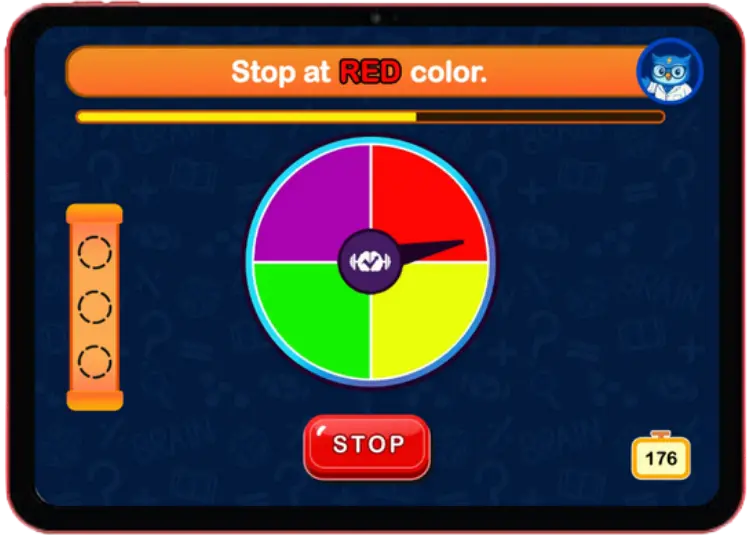
- Built light for 3G and 4G
- Nothing to install
- Any modern browser
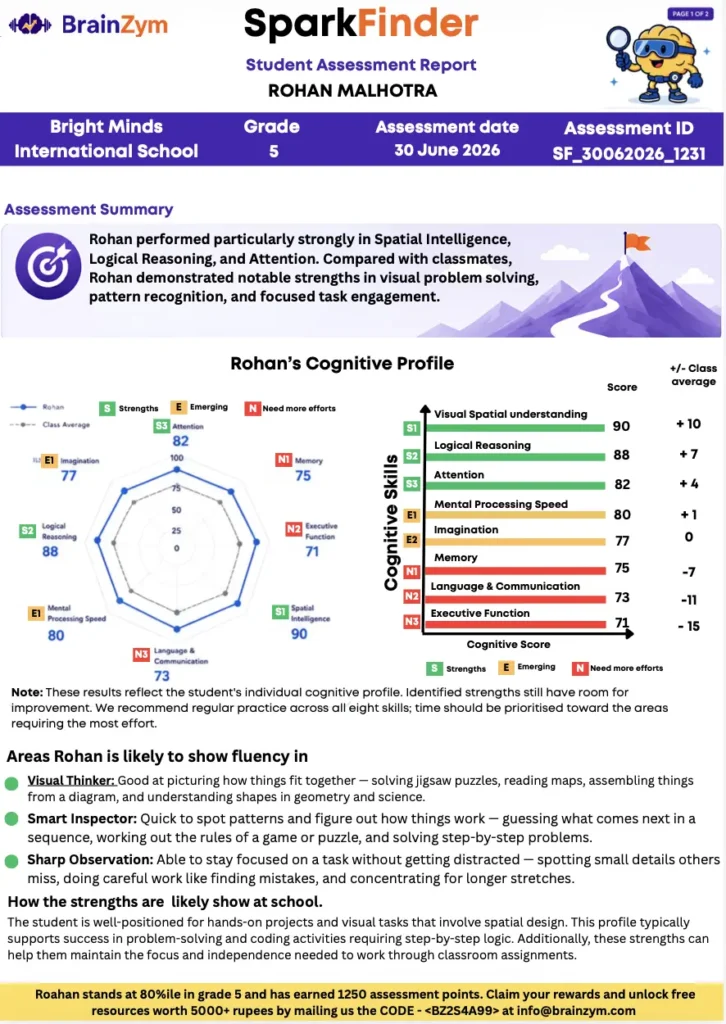
You get a report that finally understands your child.
- No jargon
- No ranking against other kids
- Student-level reports for parents and class teacher
- Class and school-level reports for schools
- Personalised post-assessment activity recommendations
What kind of spark does your child carry?
Every learner has a unique spark in them. Let's discover it.
Sharp Observer

Notices what most people miss
Goal Getter

Finishes what they begin
Calm Navigator

Stays focused and calm in tough times
Vivid Visionary

Imagines first, explains later
Visual Thinker

Thinks in pictures before words
Bring a Spark Day to your school.
One grade, one day, zero cost — every child plays, and your school gets a grade-level cognitive snapshot. The simplest way to try SparkFinder.
Spark Discovery Day
One grade, one day — a snapshot of what your children look like from the inside.
SparkFinder Class
A full section across the year, quarterly assessments, teacher dashboards.
SparkFinder School
Whole-school rollout, grades 1–12, with staff onboarding and school-wide reporting.
Quick Questions (FAQs)
No. SparkFinder does not produce an IQ score and is not a diagnostic tool. Children play short activities, and we look at patterns across cognitive domains such as attention, memory and processing speed. The result describes how a child approaches learning — it does not label, rank or diagnose them.
Often, yes. Strong reasoning, memory or imagination can sit behind an ordinary report card, and a child who is coasting looks much the same as a child who is stretched. A cognitive profile shows which of the two you are looking at — and where a confident learner might still be quietly under-challenged.
A profile in plain language: where a child's natural strengths sit, which areas may benefit from support, and practical next steps. Parents get their own child's profile; teachers additionally see class-level patterns and suggested classroom actions.
That is the intention. Reports avoid clinical language and are written around what you would actually do next — the kind of task to try, the kind of support to offer. Nothing in them requires interpretation by a specialist.
Student data is collected and stored in line with India's Digital Personal Data Protection Act, 2023. It is never sold or used for advertising, parental consent is built into enrolment, and schools control who can see which reports.
Ready to see how your child really thinks?
In 45 minutes of play. Zero pressure.
One useful FREE resource per week
Practical ways to build attention, memory and thinking skills at home.
No spam, unsubscribe any time.